
In this article
A vertical garden is the quickest way to make a small Philippine home feel green. It turns a blank perimeter wall, a narrow side yard or a balcony into planting without taking up floor space. It is also one of the easiest garden features to get wrong in our climate, because wall planters dry out fast in March and drown in August.
Here is what works, what to plant, and how to keep it alive past the first summer.
Pick the right type of vertical garden
Wall pocket systems
Felt or fabric pockets fixed to a frame. They look soft and lush and are light, but the small amount of soil dries quickly in the heat. Best on shaded or semi-shaded walls with a drip line.
Modular wall planters
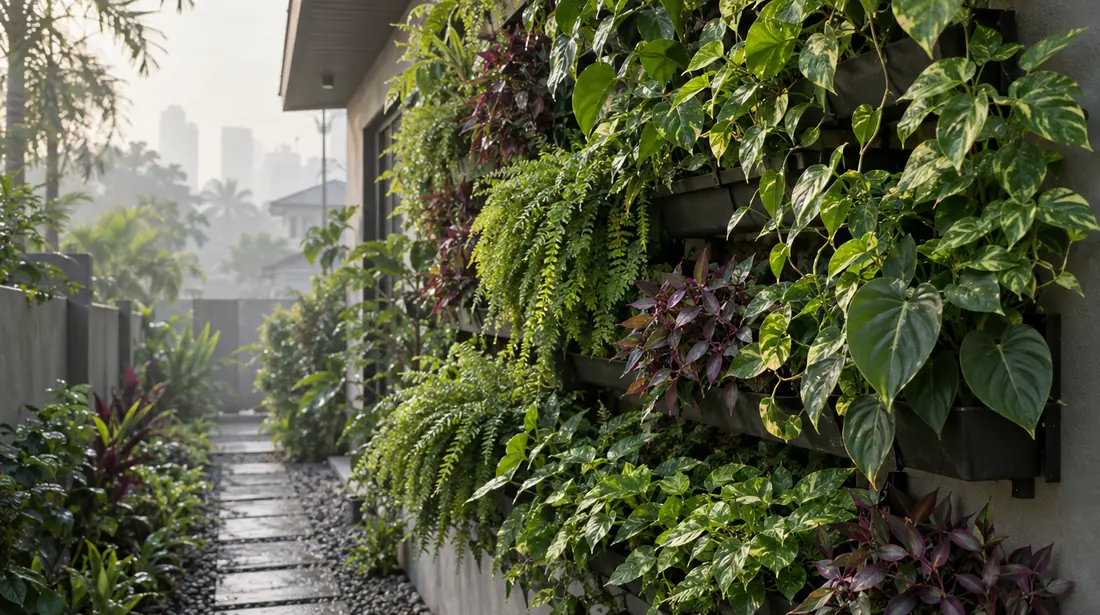
Rigid boxes or trays that clip onto a rail. They hold more soil than pockets, drain better in heavy rain, and individual modules can be swapped out when a plant fails. This is the most practical choice for most homes.
Trellis and climbers
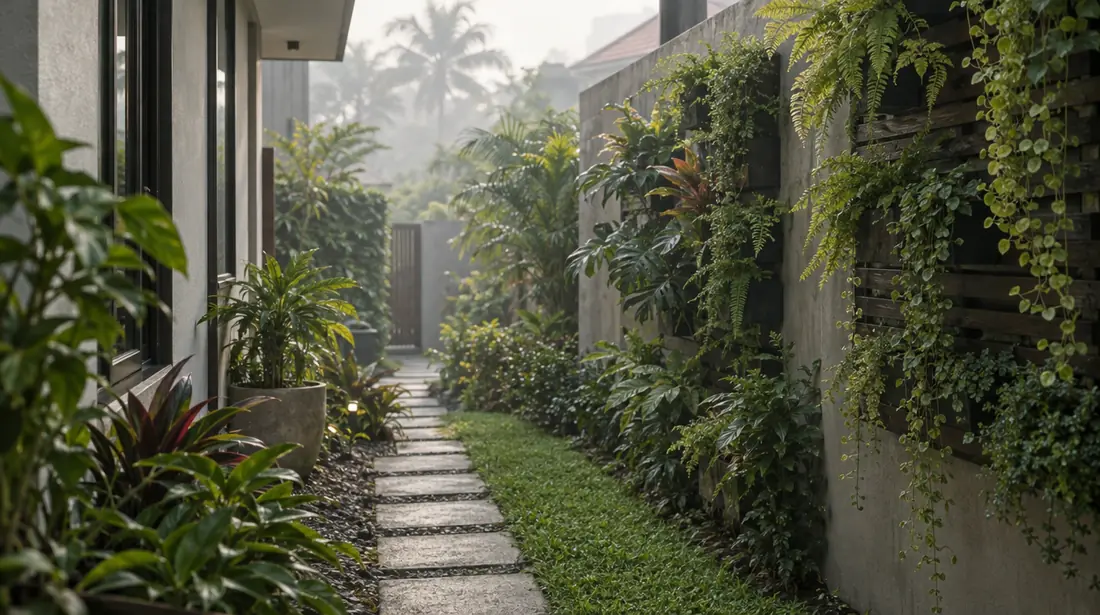
A steel mesh, cable or timber trellis with climbing plants rooted in the ground or in a long planter at the base. It is the cheapest, toughest and lowest-maintenance option, and the only one that really thrives on a hot, sunny wall.
Shelf and ladder gardens
Tiered shelves with potted plants. Good for balconies and renters because nothing is fixed permanently to the wall, and you can move pots around as the light changes.
Read your wall before you plant
- Sun hours. Count how many hours of direct sun the wall gets. West-facing walls bake in the afternoon; walls under eaves may get almost no rain.
- Waterproofing. Wet soil against concrete or hollow block will eventually bring damp into the wall. The system needs a gap and a waterproof backing.
- Weight. Wet soil is heavy. Fix the frame into solid wall, not plaster, and check balcony limits in condos.
- Water and drainage. Plan where the run-off goes. A gutter or gravel strip at the base stops it splashing mud onto the wall and path.
Plants that do well on Philippine walls
Shade and semi-shade (under 3 hours of direct sun)
- Pothos (golden and marble)
- Philodendron, including heartleaf
- Boston fern and other ferns
- Peperomia
- Spider plant
Part sun (3 to 5 hours)
- Rhoeo, also called bangka-bangkaan or oyster plant
- Purple heart
- Bromeliads
- Wandering jew (Tradescantia zebrina)
Full sun (trellis, not pockets)
- Blue ternate (pukinggan), which also gives you flowers for tea
- Thunbergia (sky vine)
- Bougainvillea trained flat against the wall
- Mandevilla (dipladenia) for long flowering
Group plants with the same light and water needs on the same section of wall. Mixing a fern with a sun-loving trailer means one of them will always be unhappy. For more plant choices that cope with our weather, see our list of the best plants for Metro Manila gardens.
Watering and feeding
Wall planters are small containers, and small containers dry out fast. A drip line on a timer is the single biggest factor in whether a vertical garden survives. Set it to run early in the morning in dry season and turn it down in the wet months, when too much water causes root rot instead.
Feed lightly and often with a balanced liquid fertiliser during the growing season. Too much fertiliser makes leggy growth that hangs untidily off the wall.
Rainy season and typhoons
- Make sure every module drains freely, so heavy rain does not sit in the soil.
- Check that the frame is fixed into solid wall before typhoon season. A loaded wall planter is heavy.
- Trim climbers back before a big storm so they do not act like a sail on the trellis.
Our monsoon garden prep checklist covers the rest of the garden too.
Common mistakes
- Pockets on a hot west wall. They dry out by lunchtime. Use a trellis with climbers there instead.
- No waterproof backing. The wall behind slowly goes damp and stained.
- Hand watering only. Fine for a week, then someone goes on holiday and the wall dies.
- Too many plant types. Five or six varieties in bold bands look better than twenty scattered ones.
Planning a vertical garden
The right system depends on your wall, its sun, and how much upkeep you want, so we design vertical gardens after a site visit. Book a site visit and we will check the wall, the light and the water supply, then give you a fixed written price. If you only need regular care for an existing wall, our garden maintenance visits cover trimming, feeding and replacing tired plants.
Frequently asked questions
What plants are best for a vertical garden in the Philippines?
For shaded walls, pothos, philodendron, Boston fern, peperomia and spider plant are reliable. For walls with a few hours of sun, rhoeo (bangka-bangkaan), purple heart and bromeliads cope with the heat. For full sun, climbers on a trellis such as blue ternate, thunbergia or bougainvillea do better than wall pockets.
Will a vertical garden damage my wall?
Not if it is built with a gap and a waterproof backing. The planting system should hang on a frame or rail that keeps wet soil off the wall, with a membrane or board behind it so water cannot soak into concrete or hollow blocks.
How often do you water a vertical garden?
Wall planters dry out much faster than garden beds, so most need water every day in dry season. A drip line on a timer is the simplest way to keep it consistent, and rainy season usually means switching the timer down or off.
Can I have a vertical garden in a condo or townhouse?
Yes, on a balcony or a small side wall. Check the weight limit, how water will drain off the balcony floor, and any building rules about attaching things to walls before you start.

Eli has been working in the landscaping and outdoor services industry across Metro Manila, connecting homeowners with vetted landscaping professionals. He writes practical guides based on real project experience in Quezon City, Marikina, Pasig, San Juan, and Caloocan.