
In this article
Japanese and zen gardens are some of the most requested styles we build, and they suit Philippine homes better than most people expect. They rely on stone, gravel and shape more than on flowers, they need less water than a lawn, and they bring calm to a small lot. The trick is adapting a temperate-climate style to our heat, rain and humidity.
The elements of a Japanese garden
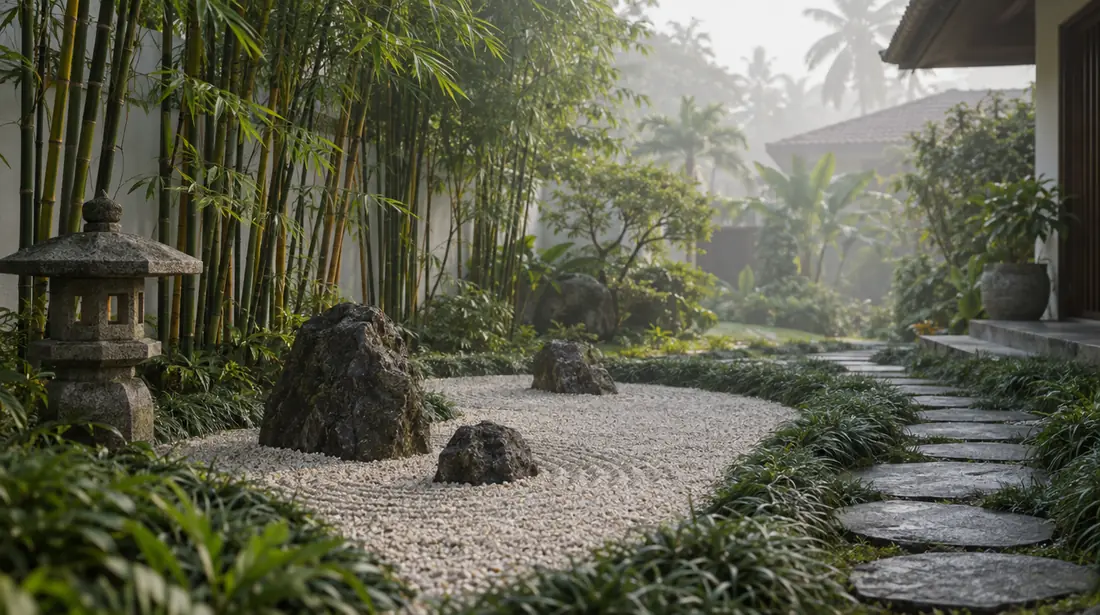
- Stone. Rocks are placed to suggest mountains or islands. Fewer, bigger, well-placed stones look better than many small ones.
- Gravel. Raked gravel represents water in a dry garden (karesansui). It also keeps the garden clean and low-water.
- Water. A stone basin, a slow trickle, or a small pond adds sound and movement.
- Clipped plants. Shrubs and small trees shaped into soft clouds give the garden structure.
- Path. Stepping stones slow your walk and frame the view.
- Ornament. A stone lantern or a bamboo fence, used sparingly.
Japanese plants that struggle here, and what to use instead
| Classic choice | Problem in lowland Philippines | Use instead |
|---|---|---|
| Japanese maple | Burns and declines in heat | Kalachuchi or a small clipped tree for form |
| Moss carpets | Needs constant shade and moisture | Mondo grass, dwarf mondo grass, zoysia |
| Azalea | Prefers cool highlands like Baguio | Kamuning or ixora clipped into soft shapes |
| Japanese black pine | Slow and unhappy in humidity | Podocarpus clipped into a cloud shape |
| Running bamboo | Spreads aggressively | Clumping bamboo |
Other plants that look right in a Philippine zen garden include rhapis (lady palm), ferns for shady corners, bonsai-style bougainvillea or kamuning in pots, and fine-textured ground covers.
Zen garden design ideas
1. Dry gravel garden with three stones
The simplest form: a rectangle of raked gravel, three stones of different sizes set in a loose triangle, and a clean edge. It fits a front yard, a side yard or even a light well.
2. Bamboo screen and stepping stones
A row of clumping bamboo along a boundary wall, a path of flat stepping stones through mondo grass, and a lantern at the turn of the path. It gives privacy and a sense of journey in a narrow space. Our guide to garden stepping stones covers spacing and materials.
3. Pebble riverbed
A winding bed of river pebbles flowing between plantings suggests a stream without the upkeep of water. It doubles as a drainage channel in rainy season, which makes it very practical here.
4. Courtyard zen garden
For homes with an inner courtyard, combine a gravel floor, one feature tree in the centre, a water basin and soft lighting. This is what our Japanese-inspired zen garden project looks like: white pebble riverbed, natural stone accents and bonsai against a textured wall.
5. Zen corner for a small lot
Even a two-metre corner can hold gravel, one rock, one bamboo clump and an uplight. See more mini garden ideas for tight spaces.
Making it last in our climate
- Base under the gravel. Compacted base material and landscape fabric stop gravel sinking into mud and weeds pushing through.
- Edging. Steel, stone or concrete edging keeps gravel out of the lawn and off the path.
- Drainage. A Japanese garden should never hold puddles. Slope the beds slightly and, on heavy clay, add a drain. Our yard drainage solutions post explains the options.
- Stagnant water. Keep basins and ponds moving or refreshed so mosquitoes cannot breed.
- Typhoons. Anchor lanterns and tall stones, and thin bamboo clumps before storm season so wind passes through.
Upkeep
Rake the gravel when it gets messy, pull weeds while they are small, clip shrubs every few months to keep their shape, and clear fallen leaves from the gravel weekly. A zen garden looks its best when it looks cared for, which is why many clients pair it with a monthly maintenance plan.
Designing your zen garden
Stone placement, the size of the gravel bed and the planting all depend on your space, so we design these gardens after a site visit. Book a site visit and you will get a fixed written price for the design and build. Browse our portfolio to see the zen gardens we have built.
Frequently asked questions
Can you make a Japanese garden in the Philippines?
Yes. The design ideas travel well: rocks, gravel, water, bamboo, clipped shapes and calm. What changes is the planting. Many classic Japanese plants struggle in lowland heat, so we use local and tropical plants with the same look.
What can replace moss in a Philippine zen garden?
Real moss needs constant shade and moisture. Mondo grass, dwarf mondo grass and a fine-leaved lawn grass like zoysia give the same soft green carpet and handle our climate much better.
Will raked gravel survive heavy rain?
Gravel can wash out or sink into soil in heavy rain if it is laid straight on the ground. Lay it over compacted base material and landscape fabric, keep the bed slightly raised or edged, and make sure the area drains, and it will hold its pattern well.
Which bamboo should I plant?
Use a clumping bamboo, not a running type. Clumping bamboo stays where you plant it; running bamboo sends roots under paths and walls and is very hard to remove.

Eli has been working in the landscaping and outdoor services industry across Metro Manila, connecting homeowners with vetted landscaping professionals. He writes practical guides based on real project experience in Quezon City, Marikina, Pasig, San Juan, and Caloocan.