
In this article
Every rainy season brings mosquitoes, and with them the worry about dengue. Many homeowners ask us which plants repel mosquitoes and whether they are worth planting. The honest answer: some plants help a little, the right garden habits help a lot, and the best results come from doing both.
Plants that help keep mosquitoes away
Lemongrass (tanglad)
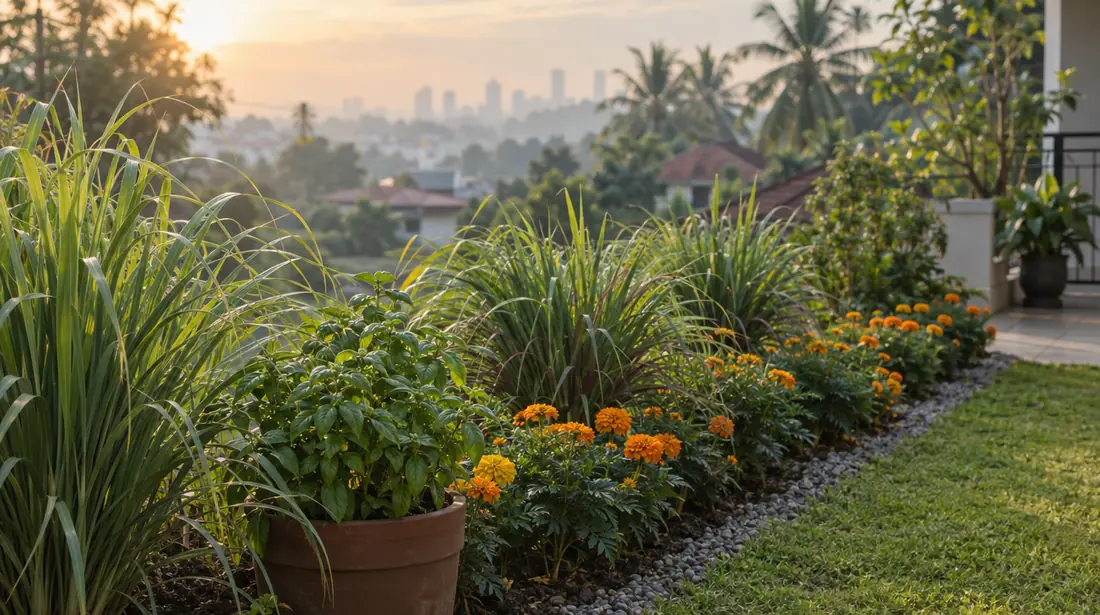
Lemongrass contains citral and other oils that mosquitoes dislike. It loves full sun, grows quickly into big clumps, needs very little care, and you can use it in cooking and tea. Plant it in pots near the terrace or in a sunny bed near the door.
Citronella grass
A close cousin of lemongrass and the source of citronella oil used in many repellents. It looks similar, grows just as easily in the heat, and is best planted in clumps near seating areas.
Basil
Sweet basil and holy basil release a strong scent that helps deter mosquitoes and flies. Grow it in pots by the kitchen door and pinch the tips often so it stays bushy.
Marigold
Marigolds are cheerful, easy and add colour to borders. Their scent is unpopular with many insects. Plant them along the edge of beds and near entrances.
Mint
Mint grows easily in partial shade and spreads fast, so keep it in a pot. Crushing a few leaves releases the oils that put mosquitoes off.
Rosemary and lavender
Both are often listed as mosquito repellents, but they are not easy in lowland Philippine humidity. Rosemary can manage in a pot with sharp drainage and full sun; lavender usually struggles. Choose lemongrass and citronella first.
How well do they really work?
Most of the research on these plants looks at their extracted oils, which are concentrated. A living plant gives off only a small amount of scent, so the effect is mild and local. You will notice the most benefit when:
- the plants are close to where you sit, not across the yard,
- you brush or crush the leaves now and then to release the oils,
- you plant several clumps, not one lonely pot.
Think of these plants as a pleasant extra, not protection.
What matters more: no standing water
Dengue mosquitoes breed in small amounts of clean, still water. The Department of Health's anti-dengue campaign starts with searching for and destroying breeding places, and gardens are full of them:
- Plant saucers and pots that hold water after watering or rain
- Blocked gutters and drains
- Bromeliads, whose leaf cups collect water. Flush them weekly or skip them near the house
- Old tyres, buckets, tarps and toys left in the yard
- Water features that are not moving
- Low spots in the lawn where puddles sit for days
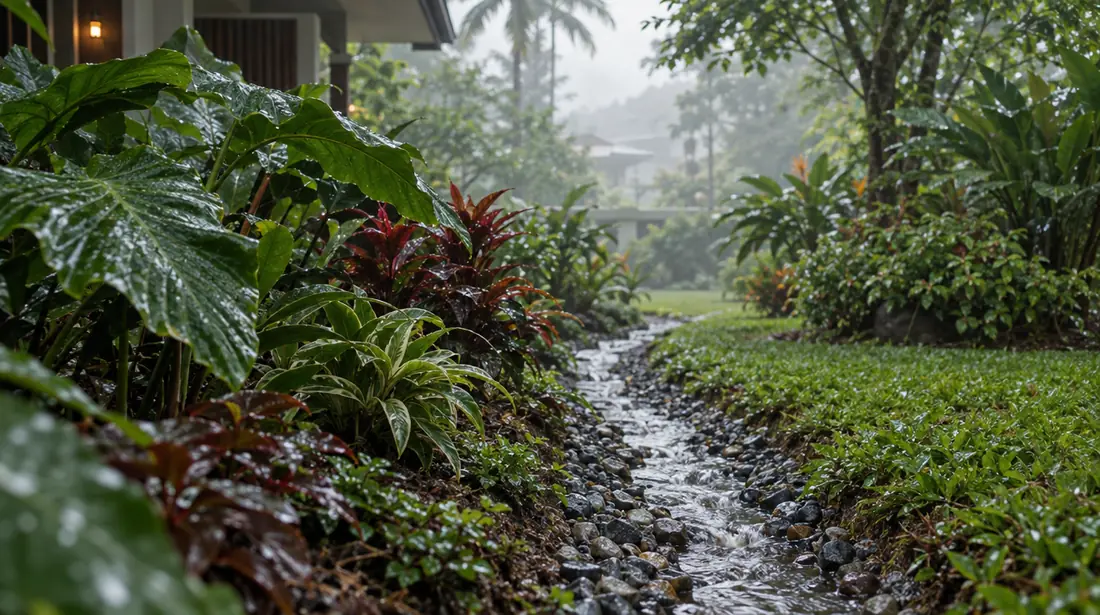
A weekly walk around the garden to tip out water, clear gutters and refresh bird baths does more for your family than any plant. If puddles keep forming in the same place, the yard needs better drainage. See our yard drainage solutions.
A mosquito-smart garden layout
- Repellent plants in pots around the terrace and doors.
- Clean gravel or pebble strips along the house instead of soggy soil.
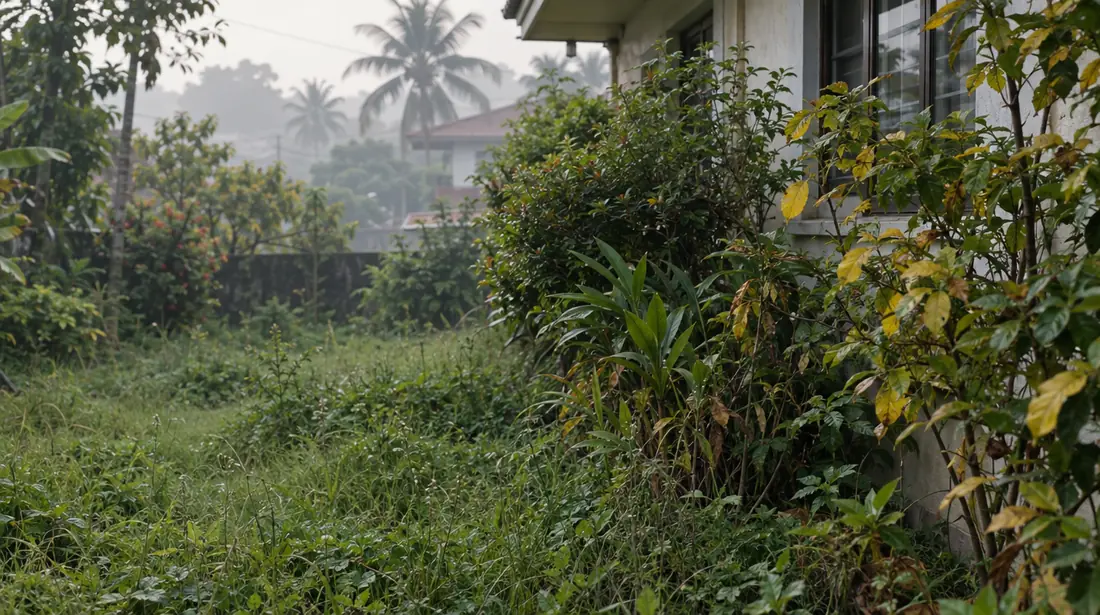
- Trimmed shrubs with air moving through them, since mosquitoes rest in dense, damp foliage.
- Good drainage so rain clears within hours.
- Moving water in any feature, or none at all.
Our monsoon garden prep checklist covers the rest of the rainy season jobs.
Let us keep the garden mosquito-smart
Trimmed shrubs, clear gutters, no standing water and healthy planting are all part of regular garden care. Our monthly garden maintenance visits include trimming, clean-up and checking for water traps. You can see your fixed monthly price online by outlining your garden on a map.
Frequently asked questions
Do mosquito repellent plants actually work?
A little. Plants like citronella, lemongrass, basil and mint contain oils that mosquitoes dislike, but a growing plant releases only small amounts. They help most when planted close to where you sit and when the leaves are brushed or crushed. Removing standing water does far more.
What is the best mosquito repellent plant for Philippine gardens?
Lemongrass (tanglad) and citronella grass are the easiest and most reliable here. They love heat and sun, grow fast, need little care, and you can cook with lemongrass too.
Where should I plant mosquito repellent plants?
Near doors, windows, the terrace and anywhere you sit outside, preferably in pots so you can move them closer when you need them. A plant at the far end of the garden does almost nothing for you.

Eli has been working in the landscaping and outdoor services industry across Metro Manila, connecting homeowners with vetted landscaping professionals. He writes practical guides based on real project experience in Quezon City, Marikina, Pasig, San Juan, and Caloocan.