
In this article
A stepping stone path is one of the simplest ways to make a garden feel finished. It gives people a clear route, protects the lawn from worn tracks, and adds a natural rhythm to the space. Done well, it lasts for years. Done badly, the stones tilt, sink and get slippery by the second rainy season.
Choosing a material
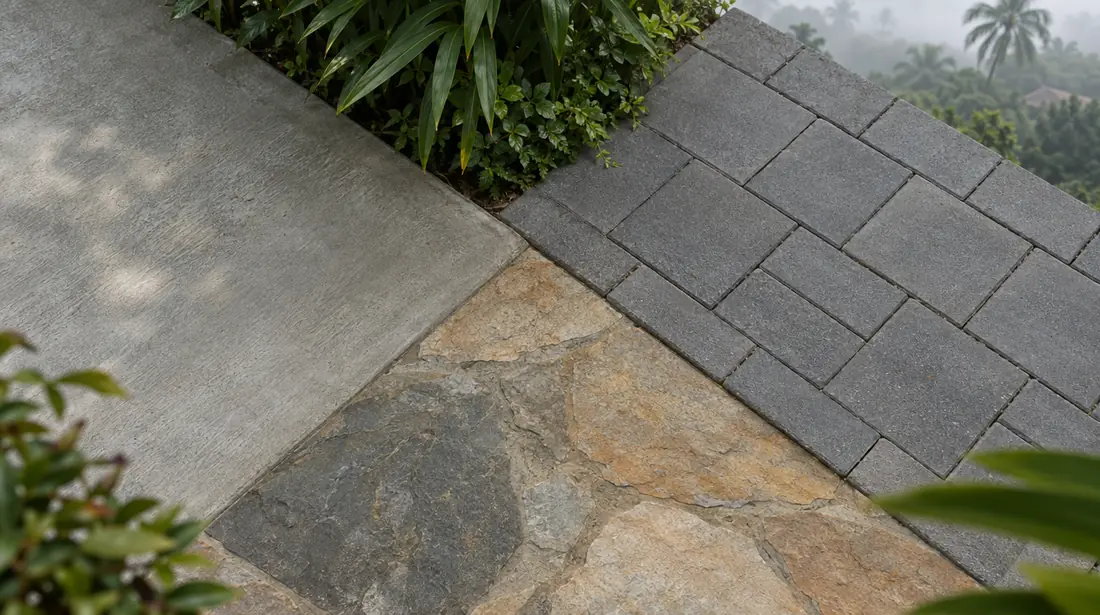
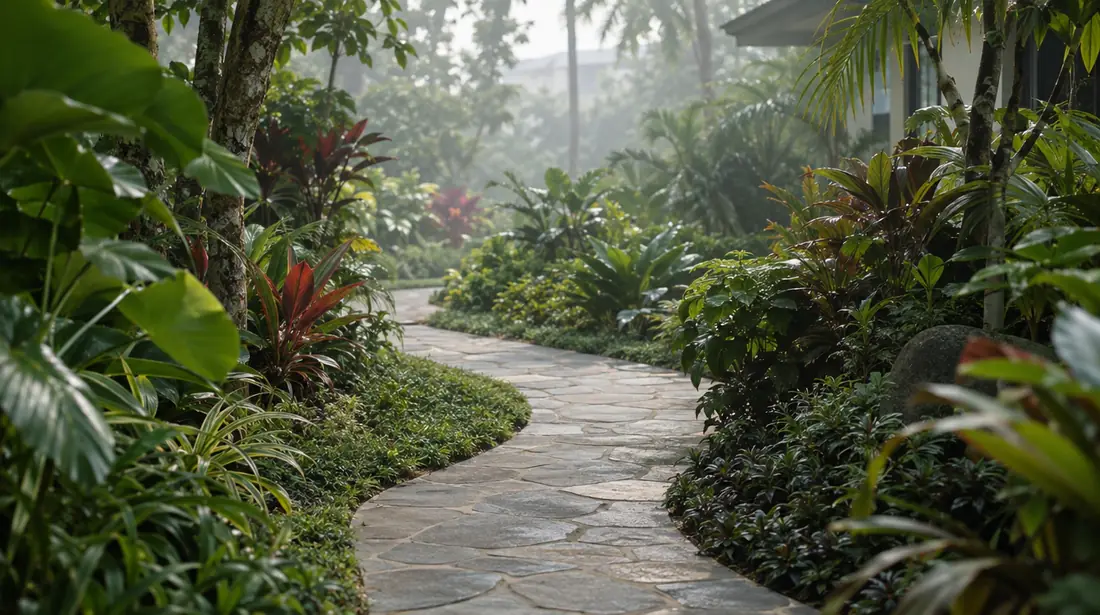
Natural flagstone
Flat pieces of natural stone, usually irregular in shape. It looks the most natural, ages well and is textured enough to stay grippy when wet. This is what we use most in zen and tropical gardens.
Concrete pavers and slabs
Square, round or rectangular concrete pieces, including stamped and washout finishes. They are consistent in thickness, which makes them easy to set level, and they suit modern homes. Pick a textured finish, not smooth.
Cast "stone-look" pavers
Concrete pavers moulded to look like stone or timber. A good middle ground on budget and looks, as long as they are thick enough not to crack.
Timber rounds
Beautiful in photos, but timber in contact with wet soil rots quickly here and invites termites. Skip it, or use a stone-look alternative.
For a wider comparison of path and patio surfaces, see concrete vs pavers vs stone.
Getting the spacing right
The most common mistake is spacing stones by eye on the ground rather than by how people walk.
- Set the centres of the stones about 55 to 65 cm apart, roughly one easy stride.
- Walk the path before you fix anything, ideally with the people who use it most.
- On curves, keep the spacing steady along the inside of the curve.
- Leave a gap of grass or pebbles between stones wide enough to mow or rake.
Stepping stone path ideas
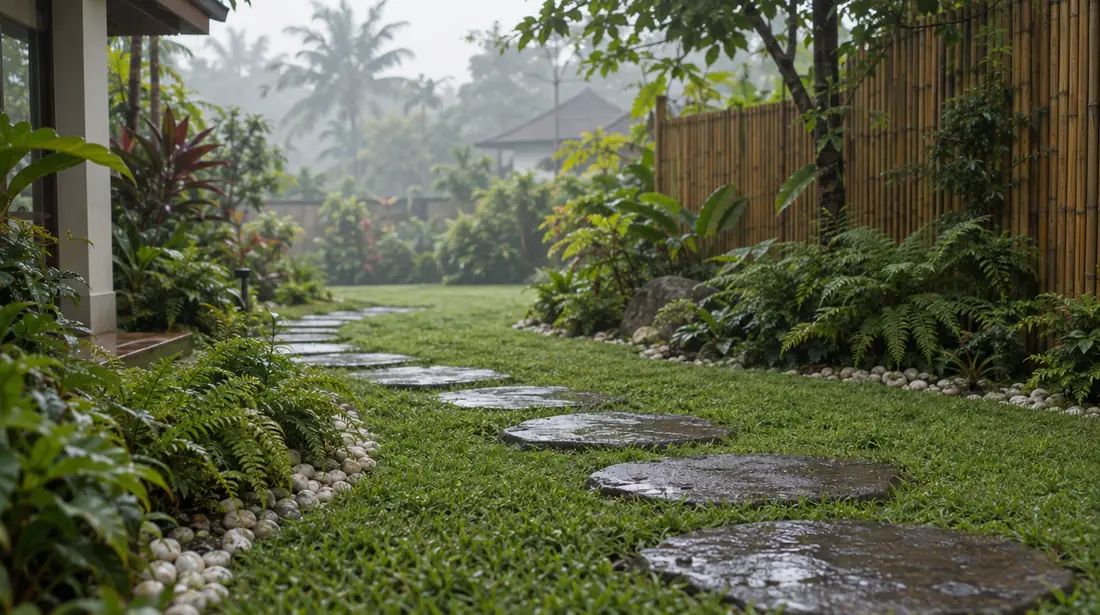
1. Stones in a carabao grass lawn
The classic look: flagstones set flush with the lawn so you can mow straight over them. Carabao grass or zoysia grows neatly around the edges. Our best grass for Philippine lawns post compares the options.
2. Stones on a bed of white pebbles
Set large stones on a bed of washed pebbles with landscape fabric underneath. No mowing, very little weeding, and it drains instantly in heavy rain. It suits side yards and front strips.
3. Zen path with bamboo and lanterns
A curving path of flat stones through mondo grass, with clumping bamboo on one side and a stone lantern at the turn. See our guide to Japanese and zen garden design.
4. Stepping stones across a pebble riverbed
A dry riverbed of rounded pebbles with a few large stones crossing it is a feature and a drainage channel in one. It works especially well where rain already runs through the yard.
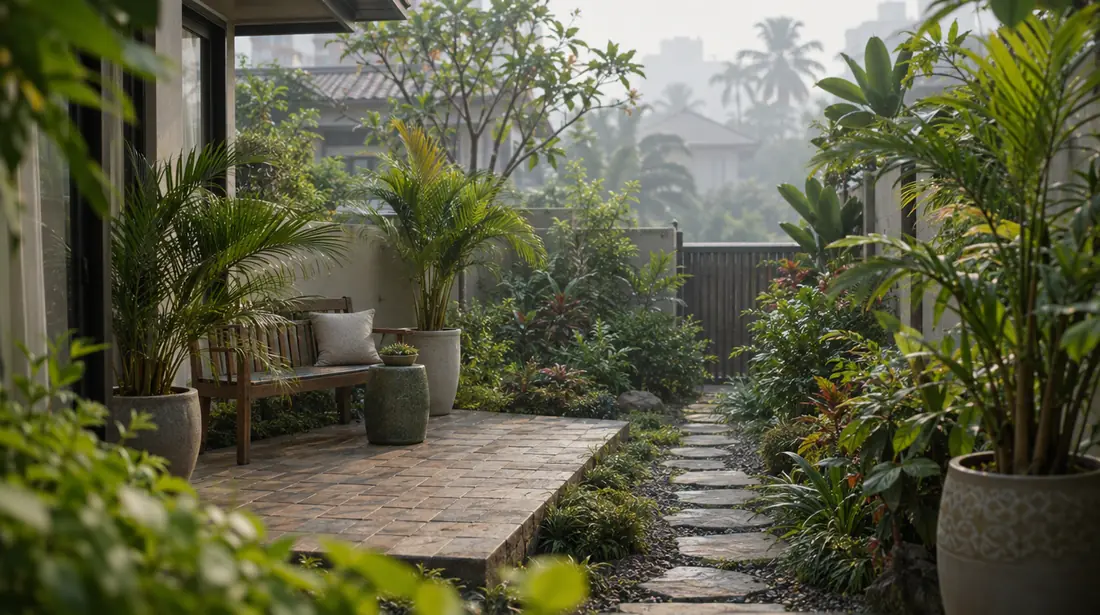
5. Modern grid of square pavers
Large square pavers set in a straight line with neat gaps of grass or black pebbles. Clean and geometric, a good fit for contemporary houses. Our Residential Front Yard Installation project uses a row of stone pavers in front of Japanese stone lanterns and topiaries.
How to set stepping stones so they last
- Mark the route and place the stones on the surface first. Walk it and adjust.
- Cut around each stone and lift out the soil.
- Dig a little deeper than the stone's thickness.
- Add a base of compacted gravel topped with sand.
- Bed the stone so its top sits level with the grass, or just above it on clay soils that hold water.
- Check it does not rock, then backfill around the edges.
Without that base, rain softens the soil and the stones slowly sink or tip, especially on Metro Manila's heavier clay soils. If water pools along the path after storms, deal with the drainage first.
Keeping them safe and tidy
- Trim grass back from the edges so the stones stay visible.
- Scrub off algae once or twice a year, especially on shaded paths.
- Re-level any stone that starts to rock before someone trips.
- Add low path lights for night use.
Adding a stone path to your garden
A stepping stone path is a quick improvement, but the right material and layout depend on your soil, drainage and style. Book a site visit and we will measure the route and give you a fixed written price, or see more stonework in our hardscaping services.
Frequently asked questions
How far apart should garden stepping stones be?
For a comfortable walk, set the centres of the stones about 55 to 65 centimetres apart, roughly one normal stride. Walk the route a few times before fixing them, and adjust for the people who use the path most.
How do I stop stepping stones from sinking?
Dig out a bed a little deeper than the stone, add a layer of compacted gravel and sand, then bed the stone so its top sits level with or slightly above the grass. A proper base is what stops stones tilting and sinking in rainy season.
What is the best material for stepping stones in the Philippines?
Natural flagstone and thick concrete pavers both last well. Choose a textured, non-slip surface, because smooth stone and glazed tiles get slippery in the rain. Timber rounds look lovely but rot and attract termites in our climate.

Eli has been working in the landscaping and outdoor services industry across Metro Manila, connecting homeowners with vetted landscaping professionals. He writes practical guides based on real project experience in Quezon City, Marikina, Pasig, San Juan, and Caloocan.