
In this article
In a lot of Filipino homes the grotto is the one part of the garden that gets visited every day. It might be a Marian shrine by the gate, a small niche in a side wall, or a full rock garden with water running down the stone. A good grotto feels calm and permanent. A badly built one cracks, stains green and collects leaves within a couple of rainy seasons.
These grotto design ideas come from the kind of gardens we build around Metro Manila, and they are chosen for our heat, our rain and our smaller lots.
What makes a grotto work
Before picking a style, get these four things right:
- Scale. The grotto should suit the space and the statue or feature inside it. A towering rock wall can swallow a small garden; a tiny niche gets lost in a big one.
- A clear focal point. The eye should land on one thing: the statue, the niche, the light or the water. Everything else, including the planting, supports that.
- Shelter. A niche that is deep enough keeps rain and direct midday sun off what is inside it.
- Drainage. Water has to leave the base quickly. This one detail decides whether the grotto still looks good in five years.
Grotto design ideas
1. Classic Marian grotto in natural stone
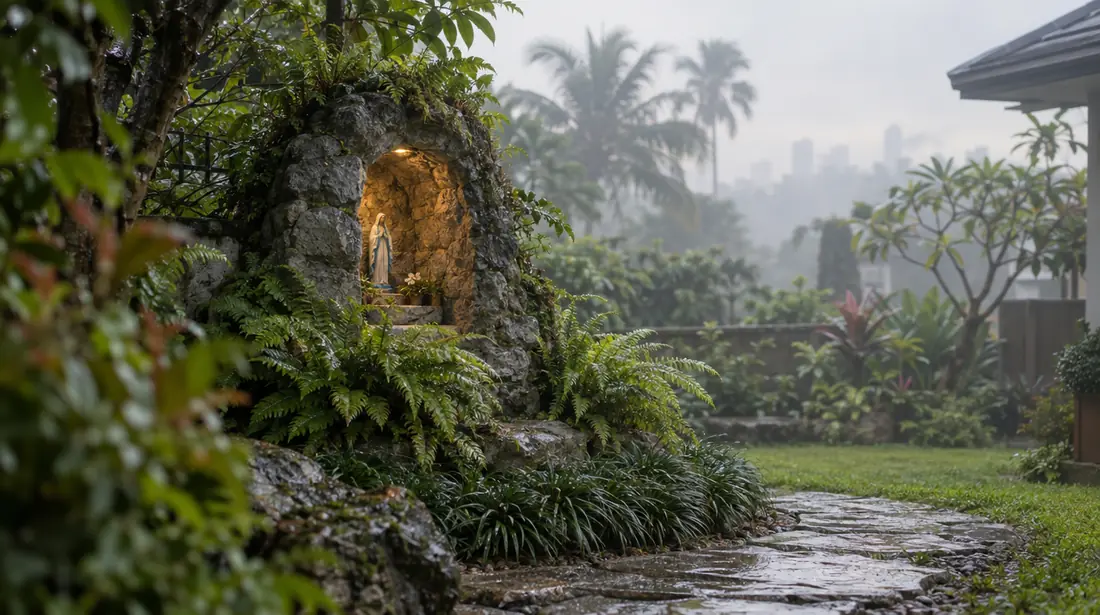
The traditional choice: an arched niche built from stacked natural stone, a raised base so the statue sits above the planting, and a simple ledge in front for candles or flowers. Grey or brown river stone looks settled from day one and only gets better with age.
2. Rock wall grotto built into a perimeter wall
If space is tight, build the grotto into an existing wall instead of in the middle of the lawn. You get a feature that runs along the boundary, hides a plain fence, and leaves the garden floor open. Our rock garden and grotto project is this type: a long stone wall with niches set into it and planting along the base.
3. Compact corner grotto for small lots
Two walls meeting at a corner already give you a backdrop and shelter. A shallow corner grotto, about a metre wide, with a small niche, a stone base and a few ferns, fits townhouses and narrow front yards well. It is also the easiest type to light.
4. Grotto with a trickle of water
A thin stream of water running down the rock face or into a small basin adds sound and movement. Keep it gentle: a trickle sounds peaceful, a gush sounds like a broken pipe. Plan the pump, the hidden reservoir and the power point before the stone goes up, not after.
5. Fern grotto for shady spots
Under trees or on the shaded side of the house, lean into the shade. Boston ferns, philodendrons, anthuriums and peace lilies grow happily around damp stone and soften the edges of the rockwork. This style suits older homes with mature trees.
6. Modern minimalist grotto
Not every grotto has to look like a cave. A clean rectangular niche in a smooth stone or textured wall, a single warm uplight and one row of low planting gives a modern home a quiet devotional corner that matches its architecture.
7. Grotto inside a rock garden
Set the grotto within a wider rock garden of boulders, pebbles and hardy plants. It ties the shrine into the rest of the landscape instead of making it a separate object. If you like this idea, our guide to hardscaping ideas for small lots has more ways to use stone in a compact garden.
Natural stone or sculpted cement rock?
Natural stone is the low-maintenance choice. It is heavy and needs a solid footing, and the shapes are limited by the stones you can find, but it does not fade and it hides weathering well.
Sculpted cement rock is built over a frame and carved while it sets. It can take any shape, including deep caves and arches, and it is lighter. The trade-off is the finish: it needs proper sealing and a natural-looking colour, or it can look painted and crack over time.
Many grottos mix the two: sculpted rock for the arch and niche, natural stone for the base and edging.
Lighting a grotto
Light turns a grotto into the best part of the garden at night. A few simple rules:
- Use warm white light. Cool white makes stone look grey and flat.
- Light the niche from below or the side, not head-on, so the stone texture shows.
- Hide the fittings in the planting or behind stones.
- Use outdoor-rated fittings and a safe power point, especially near water.
Plants that suit a grotto
- Shady grottos: Boston fern, philodendron, anthurium, peace lily, caladium and bromeliads.
- Sunny grottos: bougainvillea trained over the top, croton (San Francisco) for colour, and kalachuchi as a backdrop tree.
- Ground cover at the base: mondo grass or a neat strip of carabao grass, which keeps soil from splashing onto the stone.
Keep planting a little away from the stone face so air can move. That one gap does more to stop algae than any cleaner.
Building it to last through rainy season
- A proper footing. Stone is heavy. A grotto on soft soil will lean and crack.
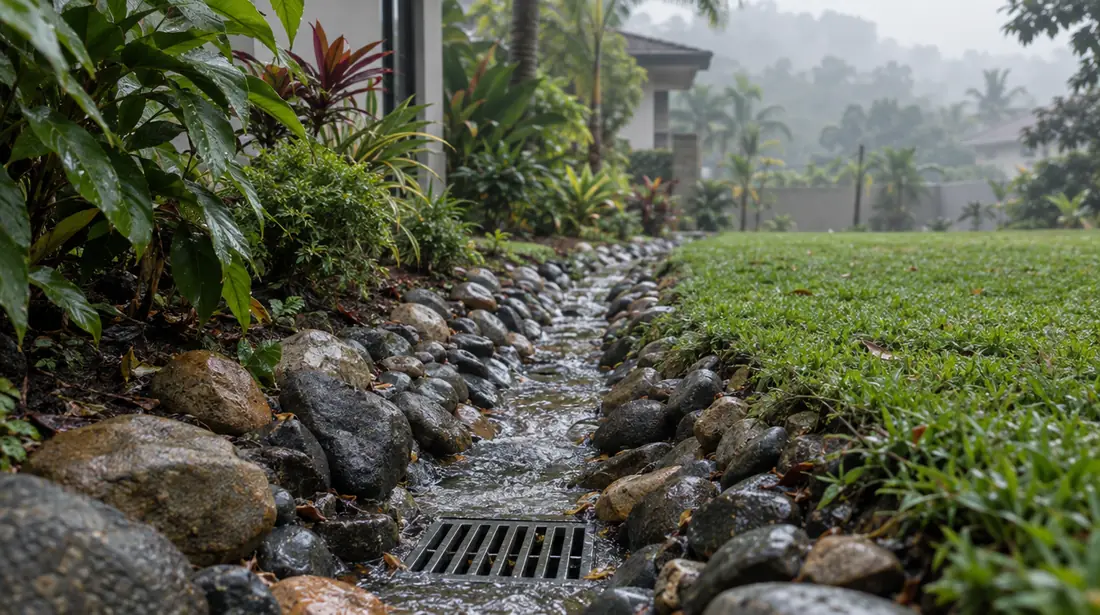
- Drainage at the base. A gravel layer and a slight slope away from the grotto keep water from pooling. If your yard already floods, read our yard drainage solutions first.
- Waterproofing behind the rock when it is built against a house wall, so moisture does not travel into the wall.
- Secure tall pieces. Statues and top stones should be anchored so typhoon winds cannot topple them.
Keeping it looking good
Clear fallen leaves every week, keep any water feature running so it does not go stagnant, trim the planting back from the stone, and give the surface a gentle scrub once or twice a year. A grotto that drains well needs very little else.
Planning a grotto with us
Every grotto is shaped by the space, the wall behind it and what will sit inside it, so we design and price them after a site visit. Book a site visit and we will measure the spot, show you options, and give you a fixed written price. You can see grottos and rockwork we have built in our portfolio.
Frequently asked questions
How much space do I need for a garden grotto?
A small corner grotto fits in about a square metre of floor space if it is built up against a wall. A free-standing grotto with planting around it needs more room, usually a few square metres, so people can stand in front of it comfortably.
Is natural stone or sculpted cement rock better for a grotto?
Natural stone ages beautifully and needs almost no upkeep, but it is heavy and limits the shapes you can build. Sculpted cement rock can be shaped into an arch or cave exactly the size you want and is lighter, but it needs a good finish and sealing so it does not crack or stain in the rain.
Can I add running water to a grotto?
Yes. A small recirculating basin or a trickle down the rock face works well. It needs a pump, a hidden reservoir, a safe outdoor power point and a basin you can reach for cleaning, so it is best planned before the rockwork goes up.
How do I stop my grotto from turning green?
Algae grows where water sits and light is low. Make sure rain drains away from the base, keep water features flowing, trim plants so air moves around the stone, and scrub the surface gently once or twice a year.

Eli has been working in the landscaping and outdoor services industry across Metro Manila, connecting homeowners with vetted landscaping professionals. He writes practical guides based on real project experience in Quezon City, Marikina, Pasig, San Juan, and Caloocan.